

Many people will need a crown at some point in their lives, and most will opt for a restoration that looks as natural as possible. If you need a dental crown, you probably have several ceramic materials to choose from, depending on the location of the tooth, your budget, and aesthetic concerns.
This article explains what a crown is and when it is necessary. We review the procedure for a dental crown and discuss the different types of ceramic crowns available.
At Broadway Family Dental, patients can discuss their options with a dentist and learn which type of ceramic crown may be most appropriate based on the location of the tooth, its condition, and their aesthetic goals.
What Is a Dental Crown?
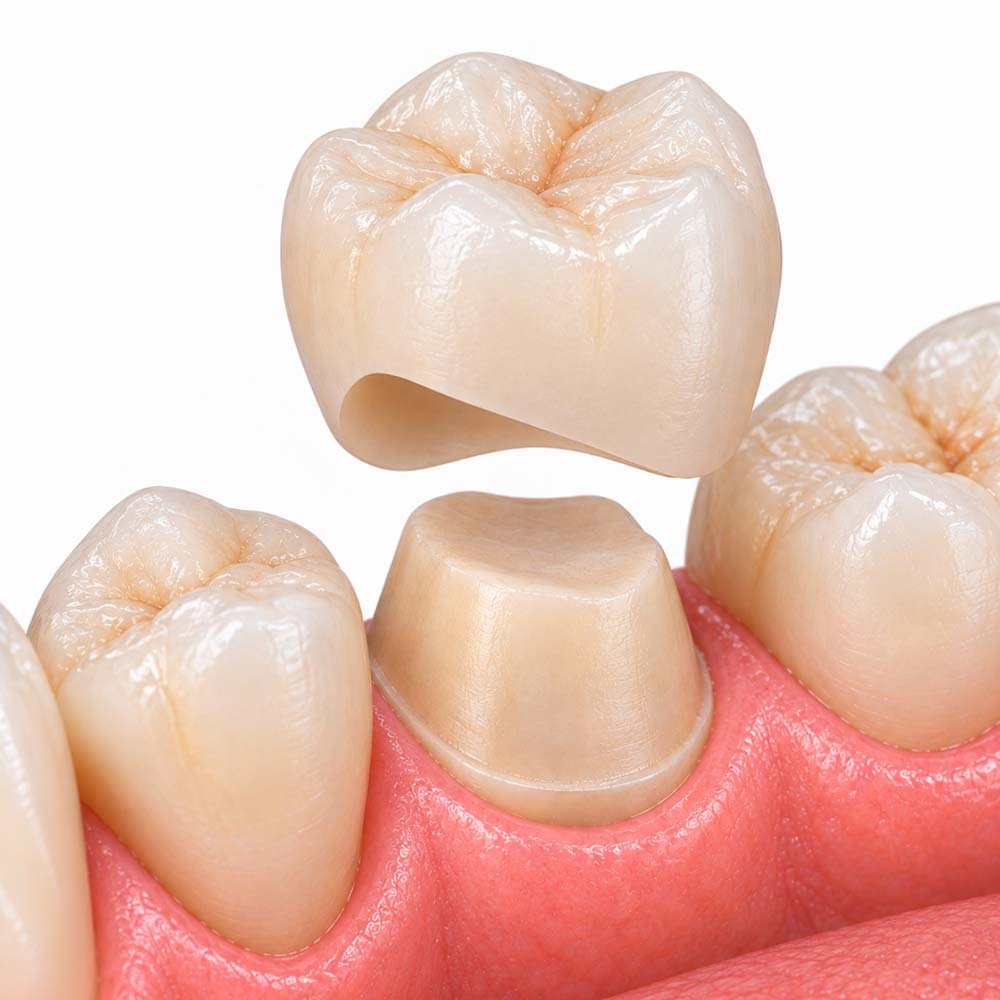
A dental crown is a natural-looking restoration that closely replicates a real tooth. It covers the tooth right down to the gum line. Once in place, none of the original tooth is visible, and strength, structure, and appearance are restored. A crown is designed to fit tightly over a tooth, sealing its margins and protecting it so that no harmful bacteria can penetrate the tooth beneath.
When Is a Crown Necessary?
Usually, a dental crown is recommended if a tooth is damaged. For example, if a tooth is severely decayed, it may have lost too much of its structure to be restored with an ordinary filling. Placing an ordinary filling would not be strong enough to protect and preserve the tooth.
Dental crowns are often used to restore teeth that have received root canal therapy. This is where a tooth has become severely infected and has likely suffered extensive decay. A root-treated tooth can become brittle afterward, so protecting it helps preserve it for longer.
Sometimes tooth damage is caused by trauma. For example, if you take a blow to a front tooth, it could chip or crack it severely.
It’s also possible to have purely cosmetic dental crowns. These can be made to fit over teeth that are severely discolored, worn down, too small, or not an appealing shape.
Different Types of Ceramic Crowns
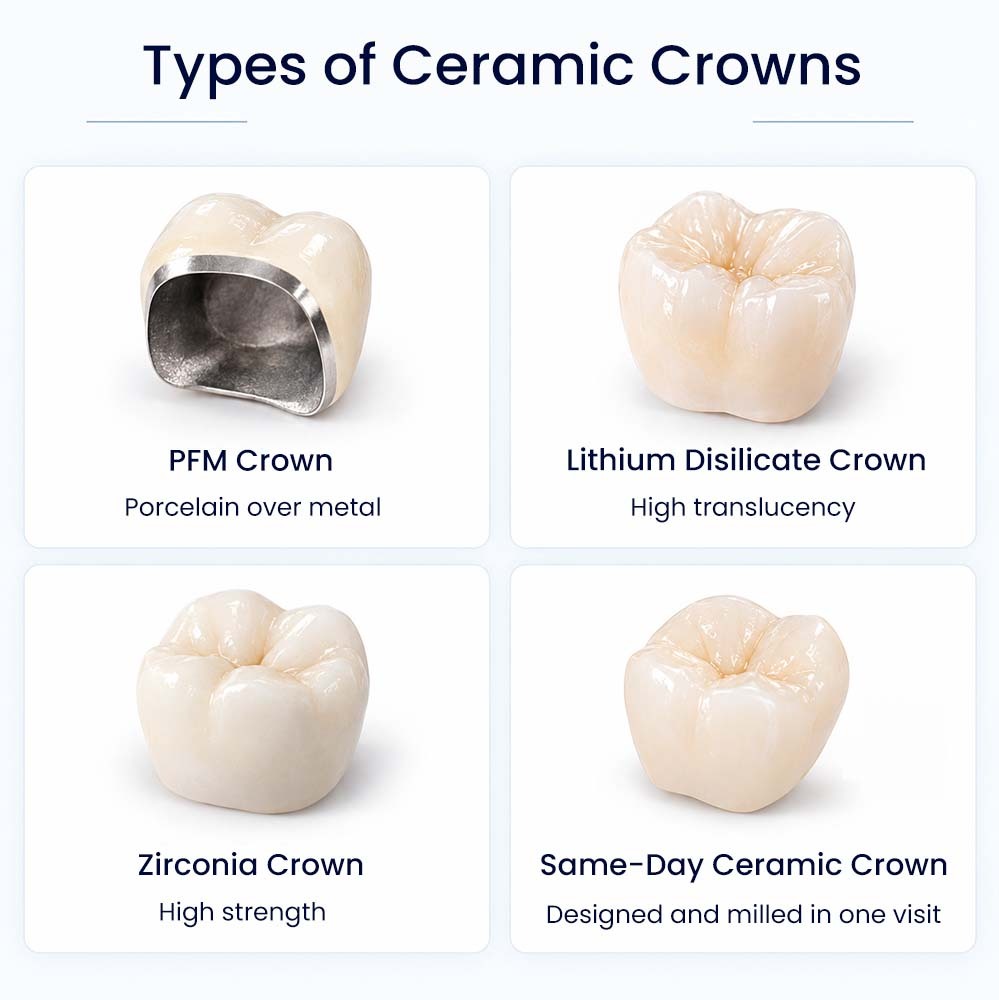
Four of the most commonly used ceramic crowns are:
- Porcelain-fused-to-metal crowns (PFMs).
- Lithium disilicate crowns.
- Zirconia crowns.
- Same-day crowns.
Porcelain Fused to Metal (PFM) Crowns
These ceramic crowns are not metal-free, as they have a thin metal substructure made from a precious metal alloy. This is covered with an opaque porcelain that masks the metal color. Layers of more translucent porcelains are added over the opaque porcelain to create a natural -looking effect.
PFM crowns have been used for many decades. They are a reliable, durable, and long-lasting choice and can be good for restoring back teeth. One issue with a PFM crown is that the gum can recede around the margin, exposing the crown’s edge, which can appear gray where the opaque porcelain is thinner. Metal-free crowns can eliminate this concern and offer better aesthetics.
Lithium Disilicate Crowns (emax)
These crowns are highly aesthetic and provide excellent results. They are all ceramic, and the material used to make them is extremely translucent and natural-looking, providing realistic results.
If you are looking for a crown to restore a front tooth, lithium disilicate is an excellent choice. However, this material isn’t as strong as some other all-ceramic crowns and may be less suitable for restoring back teeth.
Zirconia Crowns
A zirconia crown is incredibly durable, has very high flexural strength, and is ideal for restoring any tooth. Early versions of zirconia crowns tended to look slightly white, but modern zirconia crowns are far more translucent and natural-looking, providing excellent aesthetic results.
Zirconia is an amazingly strong ceramic material that is not only used to make crowns but also large-span bridges, including those used to restore a complete arch of teeth. You can even have dental implants made of zirconia.
Your dentist may recommend zirconia if you have bruxism, which is clenching and grinding your teeth. This habit can destroy crowns made of other materials, but a special zirconia variant is available that is specifically designed for this situation.
Same-Day Crowns (CEREC)
Same-day crowns are made on-site in the dentist’s office instead of being made in a dental lab. The dentist takes a digital dental impression of your prepared tooth and uses special software to design your new crown while you are still in the dental chair.
The design is sent to an on-site milling machine. A block of pre-shaded porcelain is selected in a color that blends beautifully with your natural teeth. It is then precision-milled into shape, hand-finished, and ready to fit.
Same-day crowns are ideal in many situations, as they are precision-made and very beautiful. They eliminate the need for a temporary crown and a second appointment. However, these crowns are not right in every situation; for example, if you require multiple crowns or restorations that need to be closely matched by a skilled dental technician in a dental lab.
The Procedure for Making and Fitting a Dental Crown
Most dental crowns, except for same-day crowns, require at least two visits to your dental office, but the process of making and fitting them is straightforward, non-invasive, and your dentist will ensure it is entirely painless.
Tooth Preparation
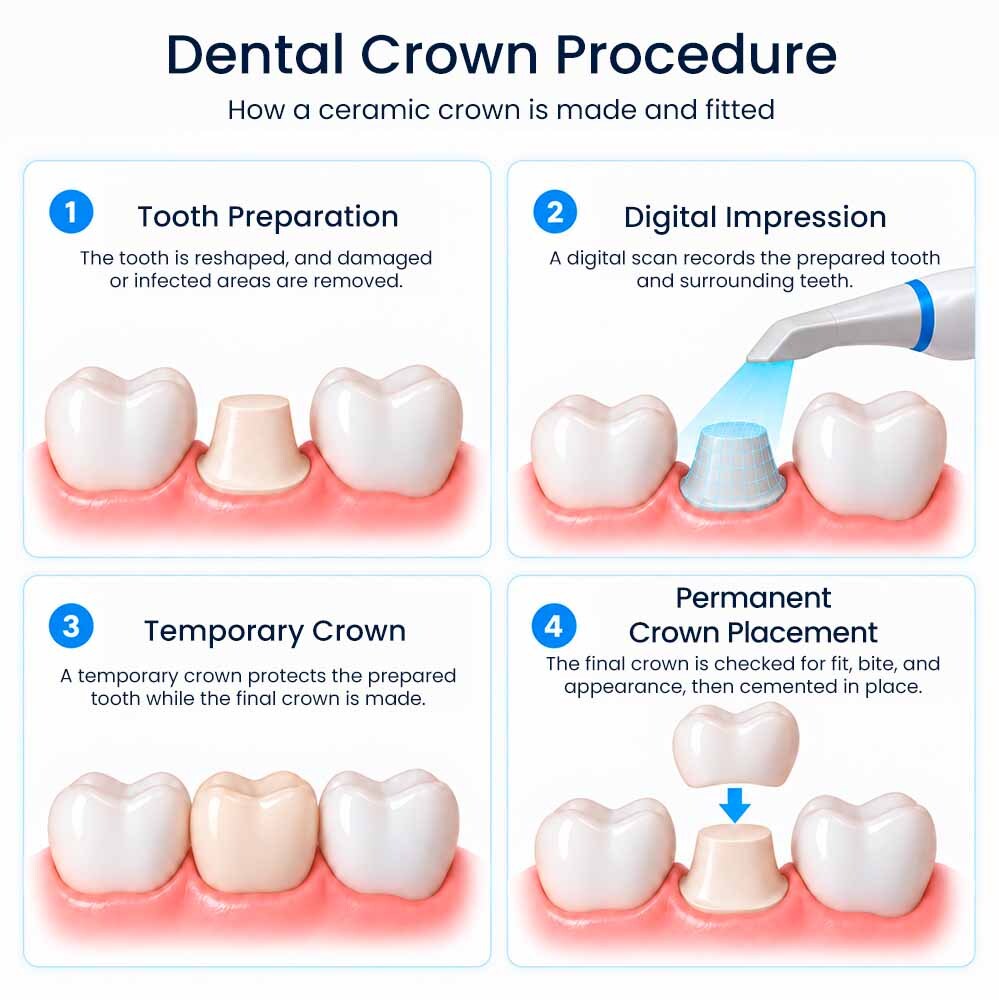
After your dentist has identified that you need a crown, your tooth is prepared using local anesthesia to numb it thoroughly. Your dentist needs to reshape the tooth, removing any damaged and infected portions and creating enough room for your new crown.
Dental Impression
After your tooth is prepared, your dentist will take a digital scan of your teeth. This provides an accurate record of the prepared tooth and surrounding teeth, helping the dental laboratory create a crown that fits precisely.
Temporary Crown
The dental impression will be sent to the dental lab along with your prescription, which includes the type of crown you require and its shade. It can take up to two weeks, or even longer, to make the crown, so your dentist will place a temporary crown on your tooth. This is made from tooth-colored composite resin, so it looks relatively good, but it is more fragile. It is only attached with temporary cement, so you will need to avoid dislodging or breaking it.
Permanent Crown Placement
When your new crown is ready, you return to your dental office, where your dentist will remove the temporary crown and fit your new crown. They will check that it fits precisely, that you can bite your teeth together properly, and that it looks good and blends in beautifully with the rest of your teeth. Once they are happy, it is permanently cemented onto your tooth, completing your treatment.
Caring for Your Ceramic Crown
Looking after a dental crown couldn’t be easier. You can brush and floss it as if it were a real tooth. Regular hygiene appointments are important so that it can be professionally checked and cleaned.
Eventually, you will need to replace your crown, but it should last 5-10 years or longer with proper aftercare.
If you are considering a ceramic crown and want to know which option may be right for your smile, Broadway Family Dental can help you understand your treatment options and choose a restoration based on your dental needs.
Need a dental crown? Contact Broadway Family Dental to schedule a consultation.
Broadway Family Dental
372 Stockton St,
Brooklyn, NY 11206
(Bushwick, Williamsburg, Bedford-Stuyvesant)
(718) 455-4400